
Yes, you can drive a rental car from Albania to Montenegro, Kosovo, and Greece. However, it is not as simple as just driving across the border. To legally cross international borders in the Balkans with a rented vehicle, you must obtain explicit written authorization from your rental provider, pay a mandatory Cross-Border Fee, and carry specific international insurance documentation, such as a physical Green Card or local border insurance. Unnotified border crossings automatically void all insurance policies and carry severe financial penalties.
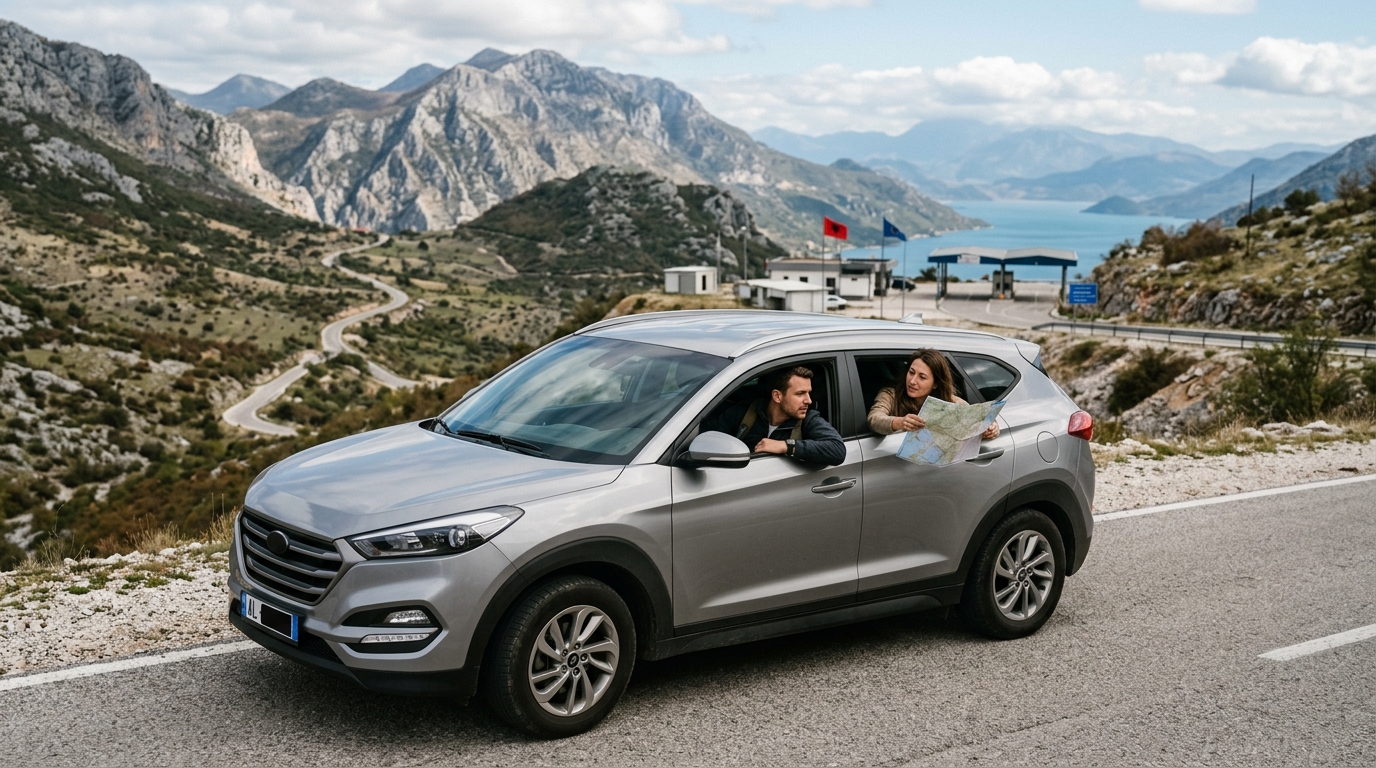
As of 2026, the Balkan road network has seen significant upgrades, making multi-country road trips highly appealing. Whether you are navigating the newly expanded Adriatic Highway in Montenegro, utilizing the R7 motorway in Kosovo, or crossing into the European Union via Greece, preparation is paramount. This exhaustive guide covers every logistical detail you need to successfully execute a cross-border car rental from Albania, including exact fees, insurance deductibles, border checkpoint procedures, and vehicle selection strategies.
Start Your Journey: 2026 Rental Search Parameters
To secure a vehicle capable of international travel, your initial search parameters must be highly specific. Do not book a standard domestic rental and attempt to add cross-border options at the desk, as fleet availability for international travel is strictly regulated. When using search aggregators or direct provider websites, apply the following criteria:
- Pick-up/Drop-off Locations: Tirana International Airport (TIA) remains the optimal hub for cross-border fleets. City center locations are viable but offer smaller vehicle pools.
- Cross-Border Filter: Actively check the "Cross-Border Travel Allowed" filter during your online search. Not all providers permit their vehicles to leave Albania.
- Transmission Preference: Automatic transmission vehicles represent roughly 60% of the 2026 Albanian rental fleet, but they book out months in advance for summer dates. Specify your preference immediately.
- Driver Age Input: Input the exact age of the primary driver. Drivers under 21 or over 70 face strict vehicle class restrictions and mandatory daily surcharges for international routes.
Quick Answer: Cross-Border Rental Rules at a Glance
If you are short on time, here are the absolute non-negotiable rules for taking an Albanian rental car abroad in 2026:
- Authorization is Mandatory: You must inform the rental agency in advance. They will issue a formal "Cross-Border Authorization Letter" linking the vehicle's VIN to your passport.
- Cross-Border Fee: Expect to pay a flat administrative fee of €40 to €80 per rental (not per day, not per country) to enable international travel and extend roadside assistance.
- Insurance Requirements: A physical, printed Green Card is required for Montenegro and Greece. For Kosovo, you must buy local border insurance (approx. €15) in cash at the customs booth.
- Passport & Licensing: You need a valid passport, a physical domestic driver's license held for at least 1-2 years, and an International Driving Permit (IDP) if you are a non-EU driver entering Greece.
- Security Deposit: A credit card (not a debit card) in the main driver's name is required for the security deposit hold, which typically ranges from €500 to €1,500 depending on the car class.
- Penalty for Unnotified Crossing: Crossing a border without the authorization letter voids your Collision Damage Waiver (CDW) and Third-Party Liability (TPL). You become 100% liable for all damages, plus a contractual penalty fee up to €2,000.
2026 Price Analytics: Cross-Border Car Rental Costs in Albania
The cost of renting a car in Albania is highly volatile and entirely dependent on the season, the vehicle class, and the booking window. Because cross-border trips usually require higher-tier vehicles (like SUVs for mountain roads) and incur additional administrative fees, budgeting accurately is critical. In 2026, the Balkan tourism boom continues to drive peak summer prices to premium levels, while winter offers deep discounts.
To secure the lowest rates for a multi-country trip, you must book 45 to 60 days in advance for travel between June and September. Last-minute bookings in August often result in being forced to rent premium luxury vehicles because all economy and compact SUVs are sold out.
Estimated Daily Rental Rates (Excluding Cross-Border Fees)
| Vehicle Class & Example Model (2026 Fleet) | Low Season (Nov - Mar) | Shoulder Season (Apr - May, Oct) | High Season (Jun - Sep) | Cross-Border Suitability |
|---|---|---|---|---|
| Economy Manual (e.g., Hyundai i20, VW Polo) | €15 - €22 / day | €28 - €40 / day | €60 - €85 / day | Good for solo travelers; paved coastal roads only. |
| Compact Automatic (e.g., Toyota Corolla, Skoda Scala) | €20 - €30 / day | €35 - €55 / day | €75 - €110 / day | Excellent for couples; Greek motorways. |
| Compact SUV (e.g., Dacia Duster, Suzuki Vitara) | €30 - €45 / day | €50 - €75 / day | €95 - €140 / day | Ideal for Montenegro/Kosovo mountain routes. |
| Full-Size SUV 4x4 (e.g., VW Tiguan, Hyundai Tucson) | €45 - €65 / day | €70 - €100 / day | €130 - €190 / day | Maximum comfort for groups of 4-5 with heavy luggage. |
| Minivan 7-Seater (e.g., Mercedes Vito, VW Touran) | €60 - €90 / day | €90 - €130 / day | €160 - €250 / day | Large families; requires high security deposits. |
| Electric Vehicle (EV) (e.g., Tesla Model 3, VW ID.4) | €50 - €70 / day | €80 - €110 / day | €140 - €200 / day | Requires meticulous route planning for charging stations. |
Mandatory Extra Costs for International Trips
When calculating your total budget, you must factor in the non-negotiable extras that apply specifically to international itineraries:
- The Cross-Border Fee: €40 - €80 per rental (flat fee). This pays for the authorization paperwork and international roadside assistance extension.
- Kosovo Border Insurance: €15 for a 15-day policy (paid in cash at the border).
- Young Driver Fee: €5 - €10 per day (max €100 per rental) if the driver is aged 21-25.
- Additional Driver Fee: €4 - €8 per day. Highly recommended for long Balkan drives to prevent fatigue.
Comparing Car Classes for Balkan Topography
Choosing the right vehicle is about matching the car's specifications to the topography of your planned route. The Balkans offer a mix of pristine multi-lane motorways and challenging, unlit mountain passes. In 2026, rental fleets in Albania are modern, but the physical limitations of certain car classes remain.
Economy and Compact Cars
Vehicles like the VW Polo, Hyundai i20, or Toyota Yaris are equipped with 1.0L to 1.4L engines. They offer excellent fuel efficiency (around 5L/100km) and are incredibly easy to park in the notoriously tight, historical streets of Kotor (Montenegro) or Parga (Greece). However, they lack the engine power required for comfortable overtaking on steep inclines, such as the Llogara Pass in Albania or the mountain roads leading into northern Montenegro. Ground clearance is low (approx. 140mm), making them unsuitable for any unpaved access roads to remote beaches or guesthouses. Trunk space is limited to one large suitcase and two small carry-ons.
Compact SUVs and Crossovers
The Compact SUV (e.g., Dacia Duster, Kia Stonic, Suzuki Vitara) is the undisputed king of Balkan road trips. These vehicles offer higher ground clearance (180mm - 210mm), allowing you to confidently navigate potholed rural roads in Kosovo or gravel paths in southern Albania. The suspension is tuned to absorb rougher terrain, drastically reducing driver fatigue. Trunk capacity accommodates two large suitcases and multiple soft bags. Furthermore, their slightly elevated seating position provides better visibility over roadside barriers on winding coastal routes. If your itinerary includes the Accursed Mountains or the Valbona valley region before crossing borders, a Compact SUV is mandatory.
Full-Size SUVs and Minivans
For groups of four or more adults, a Full-Size SUV (Skoda Kodiaq, Nissan X-Trail) or a Minivan (Opel Zafira, Ford Galaxy) is required purely for luggage capacity and cabin comfort. Attempting to squeeze four adults and their luggage into a compact car for a 14-day multi-country trip will result in severe discomfort. Be aware that these larger vehicles incur higher security deposits (often €1,200 - €1,500), consume significantly more fuel, and are extremely difficult to park in Greek and Montenegrin coastal towns. You must ensure your hotels offer dedicated, spacious parking facilities.
2026 Update: Electric Vehicles (EVs) Across Borders
Renting an EV in Albania for a cross-border trip in 2026 is possible but requires rigorous logistical planning. While Albania, Montenegro, and Greece have rapidly expanded their fast-charging networks along major highways, rural areas remain charging deserts. If you rent an EV, verify that the rental provider includes universal RFID charging cards or apps that work across all three countries. Be aware that border wait times in peak summer can last 3 hours; running the air conditioning while stationary drains the battery. EVs are strictly recommended only for drivers sticking to major urban centers (Tirana - Pristina - Skopje - Thessaloniki) and not for remote mountain exploration.
Albania Car Rental Border Crossing Rules: General Conditions
The legal framework for driving a rental car out of Albania is strict. The vehicle is the legal property of the rental agency, and crossing a sovereign border requires documented consent. Here is the exhaustive breakdown of the general rules applying to all international routes.
The Cross-Border Authorization Letter
When you declare your intention to travel abroad during the booking process, the rental company prepares a specific document. This authorization letter lists the vehicle's registration number, the Vehicle Identification Number (VIN), the main driver's passport details, and explicitly names the countries the vehicle is permitted to enter (e.g., "Authorized for travel to: Montenegro, Kosovo, North Macedonia, Greece"). Border police at the exit checkpoints of Albania will ask for the vehicle registration (Leja e Qarkullimit) and this authorization letter. If you do not have it, the police will assume the vehicle is stolen or being illegally exported, and you will be denied exit.
Age and License Requirements
The minimum age to rent a car in Albania is generally 18 for domestic driving, but cross-border travel almost universally requires the driver to be at least 21 years old. Furthermore, the driver must have held a valid driver's license for a minimum of 12 to 24 months.
Drivers aged 21 to 25 are subject to a Young Driver Surcharge. This fee mitigates the statistical risk of younger drivers navigating foreign roads. Senior drivers (typically over 70 or 75) may also face a daily surcharge or be required to purchase maximum insurance coverage. You must present a physical, hard-copy driver's license. Digital licenses on smartphones, temporary paper printouts, or learner's permits are strictly rejected by both rental agencies and border police.
Mileage Policies for International Travel
Do not assume your rental includes unlimited mileage. While domestic rentals in Albania frequently offer unlimited kilometers, the moment you add a cross-border fee, the contract often switches to a limited mileage policy. A standard limit is 150 km to 250 km per day, calculated cumulatively over the rental period (e.g., a 10-day rental gives you 2,000 km total).
If you exceed this cumulative limit, you will be charged a penalty rate per extra kilometer upon return (usually €0.15 to €0.30 per km). A road trip from Tirana to Athens and back is roughly 1,400 km. If your limit is low, these extra charges can add hundreds of euros to your final bill. Always negotiate or explicitly search for "Unlimited Mileage" cross-border contracts if planning extensive driving.
The Security Deposit Hold
To take a car abroad, the rental company requires financial security against theft, damage, and unpaid foreign traffic fines. They will place an authorization hold (a block, not a charge) on the main driver's credit card. For cross-border trips, this deposit ranges from €500 for economy cars to €1,500+ for SUVs. The credit card must be embossed with the main driver's name. Prepaid cards, virtual cards (like standard Revolut/Monzo digital cards), and cash are generally not accepted for cross-border deposits by Tier 1 and Tier 2 providers.
Driving a Rental Car from Albania to Montenegro: Route and Rules
Montenegro is the most popular cross-border destination from Albania, offering a seamless transition from the Albanian Alps to the stunning Bay of Kotor. The border infrastructure is modern, but summer traffic requires strategic planning.
Border Crossings and Customs
The two primary border checkpoints are Muriqan/Sukobin (closest to the coast, leading to Ulcinj and Bar) and Han i Hotit/Bozhaj (inland, leading to the capital, Podgorica). Both operate as joint border crossings; you stop at a single booth where Albanian and Montenegrin police sit side-by-side, processing your exit and entry simultaneously.
You must present: Passports for all passengers, the driver's license, the vehicle registration, the rental authorization letter, and the physical Green Card. In the low season, this takes 10 minutes. In July and August, the Muriqan crossing can experience queues lasting up to 3 hours. To avoid this, plan to cross the border before 07:00 AM or after 20:00 PM.
Road Conditions and Tolls
Montenegro's road network is dominated by the Jadranska magistrala (Adriatic Highway). While incredibly scenic, it is mostly a single-carriageway road. Overtaking is dangerous and strictly regulated by solid white lines. Average speeds during summer rarely exceed 40 km/h due to congestion.
Montenegro does not use a national vignette system. However, there are specific tolls. The Sozina Tunnel (connecting Lake Skadar to the coast) costs €2.50 for passenger cars. The newly opened sections of the Bar-Boljare motorway (A1) are also tolled based on distance. If you wish to skip the drive around the Bay of Kotor, the Kamenari-Lepetane Ferry operates 24/7 and costs approximately €5 per vehicle; ensure your rental provider allows the car onto domestic ferries.
Traffic Enforcement and Parking
Montenegrin traffic police are ubiquitous. They use handheld radar guns and frequently set up checkpoints just after speed limit signs drop from 80 km/h to 50 km/h near town entrances. Headlights must be turned on 24/7, and seatbelts are mandatory for all passengers.
Parking in coastal hubs like Budva, Tivat, and Kotor is highly regulated. Cities are divided into color-coded zones (Red is premium/central, Yellow is mid-tier, Green is outskirts). You pay via SMS from a local SIM card or at automated kiosks. Never park on sidewalks or yellow lines; tow trucks operate aggressively, and retrieving a rental car from a Montenegrin impound lot costs over €150 and ruins a full day of your vacation.
Driving a Rental Car from Albania to Kosovo: Border Specifics
Driving to Kosovo offers a journey into rich history and majestic mountain landscapes. The logistics differ slightly from Montenegro and Greece due to Kosovo's unique international insurance status.
The Border Insurance Mandate
Kosovo is not a member of the international Green Card system. The Green Card provided by your Albanian rental company is entirely invalid in Kosovo. To enter legally, you must purchase local border insurance (Sigurimi Kufitar).
When you arrive at the primary border crossing, Morina/Vërmicë, you will pass through passport control. Immediately after, you must pull over, park the car, and walk to the small insurance kiosks located directly at the border. You will purchase a minimum 15-day Third-Party Liability policy. The cost is exactly €15. You must pay in physical cash (Euros). Credit cards are frequently not accepted due to terminal connectivity issues. You will receive a printed paper policy; keep this in the glovebox, as police routinely check for it during traffic stops.
The Route: Rruga e Kombit
The drive from Tirana to the Kosovo border utilizes the A1 motorway, known as Rruga e Kombit (The Nation's Highway). This is a modern, high-speed, multi-lane toll road cutting through spectacular alpine scenery. There is a toll plaza near the Kalimash Tunnel. The toll for a standard passenger car is €5 (or 600 ALL). You can pay with cash or a credit card. Once inside Kosovo, the R7 motorway connects the border to Pristina. As of 2026, motorways within Kosovo remain toll-free.
Geopolitical Restrictions: The Serbia Issue
If your road trip involves driving from Albania, through Kosovo, and into Serbia, you must exercise extreme caution. Entering Serbia directly from Kosovo with a vehicle bearing Albanian (AL) or Republic of Kosovo (RKS) license plates can result in intense scrutiny at the border. Serbian border guards may require you to cover national symbols on the plates with stickers, or they may deny entry altogether depending on the current political climate.
Because of this risk, the vast majority of Albanian rental companies explicitly forbid taking their vehicles into Serbia. If you cross into Serbia against the rental agreement, the car is completely uninsured. If you plan to visit Serbia, you must route your trip through Montenegro or North Macedonia, completely bypassing Kosovo, and ensure Serbia is explicitly listed on your authorization letter.
Driving a Rental Car from Albania to Greece: EU Customs and Tolls
Crossing from Albania into Greece means exiting the Balkans and entering the European Union and the Schengen Area. This border crossing involves the most stringent security and documentation checks.
Border Crossings and Schengen Rules
The primary crossings are Kakavia (connecting southern Albania to Ioannina) and Kapshtica (connecting southeastern Albania to Kastoria). Because this is an external EU border, customs officials conduct thorough inspections. They will check the trunk for illegal agricultural imports (meat, dairy) and enforce strict duty-free limits on alcohol and tobacco.
As of 2026, non-EU travelers must ensure they comply with the ETIAS (European Travel Information and Authorisation System) requirements, or hold a valid Schengen visa. Ensure the main driver and all passengers have their travel authorizations approved before reaching the border. The Green Card is mandatory and will be scrutinized to ensure it covers Greece (represented by the country code 'GR' on the document).
The International Driving Permit (IDP) Requirement
Greece enforces strict regulations regarding driving licenses. If your driver's license was issued by an EU member state or the UK, it is fully valid in Greece. However, if your license was issued in the USA, Canada, Australia, New Zealand, or any other non-EU nation, Greek law dictates you must carry an International Driving Permit (IDP) alongside your domestic license.
While the rental agency in Albania might hand you the keys without asking for an IDP, Greek border police can deny you entry if you cannot produce it. Furthermore, if you are involved in an accident in Greece without an IDP, insurance companies can legally deny your claim, leaving you financially ruined. Always obtain an IDP from your home country before flying to the Balkans.
Greek Motorways and Toll Systems
Greece boasts an exceptional motorway network, notably the Egnatia Odos (A2) which runs horizontally across the north. These are premium toll roads. Unlike vignette systems, Greece uses physical toll booths placed every 30-50 kilometers. Tolls range from €1.20 to €3.00 per station. You can pay using cash (Euros) or contactless credit/debit cards. Ensure you have a stack of €1 and €2 coins in the center console for quick processing. Speed limits are strictly enforced at 130 km/h, with frequent automated speed cameras mounted on gantries over the highway.
Practical Driving Guide for the Balkans
Surviving and enjoying a cross-border road trip requires adapting to local driving cultures and understanding regional hazards. The Balkans are beautiful, but the roads demand constant vigilance.
Speed Limits and Traffic Police
Standard speed limits across Albania, Montenegro, Kosovo, and Greece generally follow this structure: 40-50 km/h in urban areas, 80-90 km/h on rural national roads, and 110-130 km/h on motorways. Radar traps are a daily reality. Police frequently position themselves immediately after a speed limit drops (e.g., entering a village).
If you are pulled over and fined, do not attempt to pay the police officer directly in cash, as this is considered bribery and is a severe criminal offense. You will be issued a ticket, which you must pay at a local post office, bank, or via a specific government web portal within a specified timeframe (often receiving a 50% discount if paid within 15 days). Keep the payment receipt to show the rental company when you return the car.
Road Hazards and Defensive Driving
Local driving styles can be aggressive. You will frequently encounter drivers overtaking on blind curves, tailgating at high speeds, and ignoring lane markings. The safest approach is highly defensive driving. Stay in the right lane, allow aggressive drivers to pass, and maintain a generous following distance.
In rural areas of Albania and Kosovo, the primary hazard is livestock. Flocks of sheep, stray dogs, and cows frequently wander onto the road, particularly at dawn and dusk. In the mountainous regions of Montenegro and Greece, rockfalls are common after heavy rains. Always scan the road surface ahead, and avoid driving on unlit rural roads at night whenever possible.
Roundabouts and Right of Way
Roundabouts are a common feature, especially in Albania. While the official rule dictates that vehicles inside the roundabout have the right of way, local practice often differs. Drivers entering the roundabout sometimes force their way in, expecting those inside to yield. Approach every roundabout with extreme caution, ready to brake, and make eye contact with other drivers.
Insurance Deep Dive: CDW, Deposits, and Green Cards
Understanding insurance terminology is the single most important factor in preventing a multi-country road trip from becoming a financial disaster. Here is the exact breakdown of how rental insurance works across borders.
Third-Party Liability (TPL) and The Green Card
TPL is legally mandatory and is always included in the base rental price. It covers damage you cause to other people's property or physical injuries to third parties. When you cross a border, the Green Card acts as the international proof of this TPL coverage. The Green Card does absolutely nothing to protect the rental car itself. If you crash into a fence in Montenegro, the Green Card pays for the fence; it does not pay for the dented bumper on your rental car.
Collision Damage Waiver (CDW) and The Deductible (Franchise)
To protect the rental vehicle, you rely on CDW. Standard CDW is usually included, but it comes with a Deductible (or Franchise). This is the maximum amount you are liable to pay if the car is damaged or stolen. For an economy car, the deductible might be €700. If you cause €3,000 worth of damage in Greece, you pay the first €700, and the insurance covers the remaining €2,300. The rental company blocks this €700 on your credit card as the security deposit.
Super Collision Damage Waiver (SCDW) / Full Insurance
To eliminate the financial risk, you can purchase SCDW at the rental desk (usually €15 to €30 per day). This reduces your deductible to zero (or a very nominal amount like €50). If you scratch the car, you pay nothing. Crucial Warning: You must explicitly ask the agent, "Does this Full Insurance remain valid when I cross the border into Montenegro/Greece?" Some local providers offer Full Insurance that is valid only within Albanian territory. If you cross the border, the coverage reverts to standard CDW. Always get international coverage terms in writing.
WUG Coverage (Wheels, Undercarriage, Glass)
Standard CDW and even some SCDW policies explicitly exclude damage to the tires, wheels, undercarriage, and windshield. Given the rocky terrain in the Balkans, a cracked windshield from a flying pebble or a punctured tire is highly probable. Purchasing standalone WUG coverage (an extra €5-€8 per day) is highly recommended for peace of mind.
The Emergency Protocol: What to do in an Accident Abroad
If you are involved in a collision, scratch the car against a wall, or discover the car was vandalized while parked in another country, you must follow this exact protocol to ensure your insurance remains valid:
- Do Not Move the Vehicle: Unless it is causing a massive hazard, leave the car exactly where the impact occurred.
- Call the Local Police: Dial 112 (the universal European emergency number valid in Albania, Montenegro, Kosovo, and Greece). You must obtain a formal, written Police Report (Procesverbal).
- No Police Report = No Insurance: If you return the car to Albania with damage and do not have a police report from the country where the damage occurred, all CDW/SCDW coverages are instantly voided. You will pay for the repairs out of pocket.
- Call the Rental Agency: Notify the provider immediately using the 24/7 roadside assistance number on your contract. They will guide you on towing or providing a replacement vehicle.
How to Avoid Overpaying and Scams: The Inspection Checklist
Rental car scams are easily avoidable if you are meticulous during the pick-up and drop-off phases. Your smartphone is your best defense against unwarranted charges.
The "Full-to-Full" Fuel Policy
Always demand a "Full-to-Full" fuel policy. You receive the car with 100% fuel and must return it with 100% fuel. If a provider pushes a "Full-to-Empty" policy, decline it. They will charge you an inflated premium rate for the initial tank, and you will lose money on any fuel remaining when you return the car. Before returning the car to Tirana Airport, refuel at a gas station within 5 kilometers of the airport and keep the paper receipt to prove the tank was just filled.
The 20-Point Photographic Inspection
Before you sign the final paperwork and drive away, conduct an exhaustive inspection. Do not let the agent rush you. Take a continuous, well-lit video of the entire vehicle, focusing on:
- Alloy Wheels and Hubcaps: Scratched alloys are the #1 most common damage charge. Photograph all four wheels closely.
- Lower Bumpers: Get on your knees and photograph the underside of the front and rear bumpers for scraping damage.
- Windshield and Mirrors: Look for microscopic stone chips in the glass and document them.
- Interior: Photograph the seats for stains or cigarette burns. Check the fuel gauge and mileage on the dashboard.
- Trunk Contents: Ensure the spare tire (or inflation kit), jack, warning triangle, and reflective vest are present. Border police check for these items.
Ensure every single scratch you find is marked on the physical diagram on your contract and signed by the agent. When you return the car, do so during daylight hours if possible, and have the agent sign a document stating the car was returned without new damage.
Fuel Prices, Navigation, and Extras for Long Trips
Managing logistics across four different countries requires foresight, particularly regarding fuel costs and digital connectivity.
Strategic Refueling Across Borders
Fuel prices fluctuate significantly across the Balkans. In 2026, Greece consistently has the highest fuel prices in the region, often €0.30 to €0.50 more per liter than neighboring countries. Conversely, North Macedonia and parts of Kosovo often have cheaper fuel. To save money, always fill your tank to the brim in Albania or Montenegro right before crossing the border into Greece.
Pay strict attention to the fuel type required by your rental. Diesel (Naftë) and Unleaded Petrol (Benzinë) nozzles are sometimes color-coded differently than in your home country. Putting petrol in a diesel engine causes catastrophic damage that is never covered by insurance, costing upwards of €3,000 to replace the engine block.
Navigation and Mobile Data
Do not rent an outdated physical GPS unit from the rental company for €10 a day. Instead, rely on your smartphone. However, beware of roaming charges. While Albania, Montenegro, Kosovo, Serbia, North Macedonia, and Bosnia have a "Roam Like at Home" agreement among themselves (meaning local Balkan SIM cards work across these borders without extra data fees), this does not apply to Greece (EU).
If you have an EU SIM card, it will work in Greece but will incur massive roaming charges in Albania, Montenegro, and Kosovo. The best solution in 2026 is to purchase an eSIM (like Airalo or Holafly) that covers the entire European/Balkan region, or simply download entire countries on Google Maps for offline use before you start driving.
Child Seats and Safety Gear
If traveling with children, child seats are mandatory across all Balkan countries for children under 12 years old or under 135cm in height. Reserve these seats at the exact time of booking. During the peak months of July and August, rental companies frequently run out of child seats. If you arrive and they have none, you legally cannot drive the car away with your child. To guarantee safety and availability, many parents choose to check their own child seats on their flight.
Who Should Consider Cross-Border Car Rental?
A multi-country road trip is an incredible experience, but it is not suited for every type of traveler. Assess your travel style before committing to a rental.
Highly Recommended For:
- Explorers Seeking Autonomy: Travelers who want to visit remote locations like the Theth National Park (Albania), the Durmitor mountains (Montenegro), or the hidden coves of the Epirus coast (Greece) where public transport simply does not exist.
- Families and Small Groups: Splitting the cost of an SUV rental, cross-border fees, and fuel among 4 people is often cheaper and infinitely more comfortable than buying four international bus tickets and hauling luggage between bus stations.
- Photographers and Hikers: Those who need the flexibility to arrive at trailheads at dawn or stay at scenic viewpoints until sunset, dictating their own schedule.
Not Recommended For:
- Strict Budget Backpackers: When you add the daily rate, full insurance, the €50 cross-border fee, the €15 Kosovo insurance, tolls, and fuel, renting a car is significantly more expensive than utilizing the extensive and cheap Balkan bus network.
- Nervous or Inexperienced Drivers: If you are intimidated by aggressive overtaking, steep mountain roads without guardrails, manual transmissions, or chaotic city traffic, driving in the Balkans will be highly stressful.
- Those on Extremely Tight Timetables: Border wait times are unpredictable. If you have a non-refundable flight departing from Tirana at 14:00, and you are driving back from Montenegro on the same morning, a 3-hour delay at the border will cause you to miss your flight. Always spend the final night in the country of your departure airport.
Step-by-Step Checklist: Renting a Car for Border Crossing
Follow this chronological checklist to ensure a flawless international rental experience:
- Finalize Your Itinerary: